Curated by Samantha Davis Thematic Collections are assortments of past and recently released articles in HAHR about key issues, events, individuals, or historiographical trends. These collections can be used as gateways into a specific historical subject, demonstrations of methodology, or sources for classroom discussion. As the world grapples with COVID-19, scholars and the public have turned to historical precedents of epidemic disease like the 1918 flu pandemic and typhus. The current crisis has prompted a wide range of reflections on public …

Historical Perspectives on Pandemics in Mexico Leer más »

Ariadna Acevedo-Rodrigo is associate professor of history at the Centro de Investigación y de Estudios Avanzados del Instituto Politécnico Nacional in Mexico City and specializes in the intersections between education and politics. She is coeditor of Ciudadanos inesperados: Espacios de formación de la ciudadanía ayer y hoy (El Colegio de México, 2012) and Beyond Alterity: Destabilizing the Indigenous Other in Mexico (University of Arizona Press, 2018). You can read her article “Paying for Progress: School Taxes, Municipal Government, and Liberal …

Interview with Ariadna Acevedo-Rodrigo, author of “Paying for Progress: School Taxes, Municipal Government, and Liberal State Building, Cuetzalan and Huehuetla, Mexico, 1876–1930” Leer más »

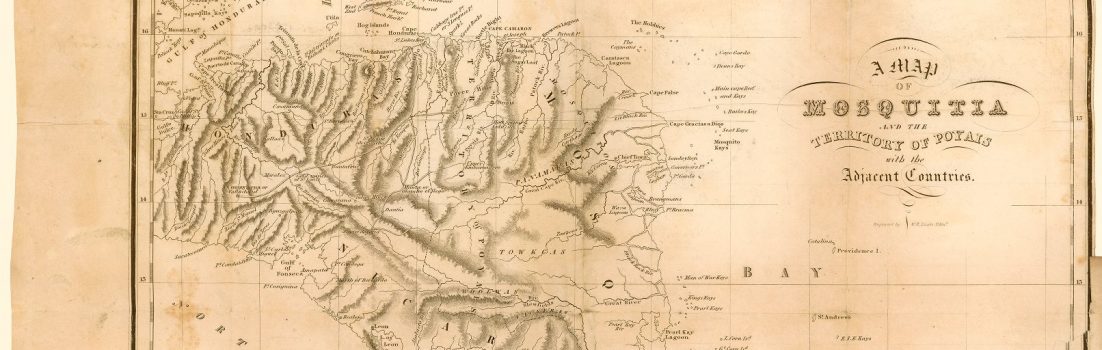
Daniel Mendiola is a faculty fellow at New York University. His research interests include borderlands, colonialism, and conquest, with Central America’s Afro-indigenous Mosquito confederation forming the principal topic of his dissertation and first book project. You can read his article “The Founding and Fracturing of the Mosquito Confederation: Zambos, Tawiras, and New Archival Evidence, 1711–1791” in HAHR 99.4.

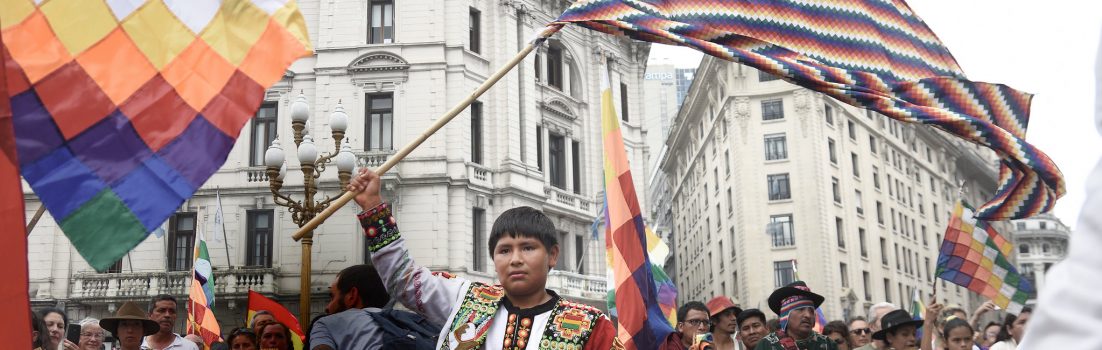
In the wake of recent events in Bolivia, we have asked some of the scholars who have published on the country in HAHR‘s pages to reflect on the following question: “What would you say is the key piece of historical context for understanding the contemporary political developments in Bolivia?” Rossana Barragán is a senior researcher at the International Institute of Social History. Her article “Working Silver for the World: Mining Labor and Popular Economy in Colonial Potosí” appeared in HAHR 97.2. …

HAHR Forum on Contemporary Bolivia and History Leer más »

Kevin A. Young is assistant professor of history at the University of Massachusetts Amherst. His article “From Open Door to Nationalization: Oil and Development Visions in Bolivia, 1952–1969” appeared in HAHR 97.1. A coup overthrew the Bolivian government. The coup was spearheaded by the country’s racist oligarchy and backed by the United States, but it was also supported by portions of the Left, the labor movement, and the middle class. The latter groups had some legitimate grievances: for instance, the …

HAHR Forum on Contemporary Bolivia and History Leer más »

Bridgette K. Werner is a postdoctoral research associate and lecturer in the Program in Latin American Studies at Princeton University. Her article “Between Autonomy and Acquiescence: Negotiating Rule in Revolutionary Bolivia, 1953–1958” is forthcoming in HAHR 100.1. On November 6, near the city of Cochabamba, mob violence struck against the mayor of the municipality of Vinto in the midst of increasingly violent protests following the October 20 elections. Opposition protesters kidnapped Patricia Arce Guzmán and burned the Alcaldía of …

HAHR Forum on Contemporary Bolivia and History Leer más »

Carmen Soliz is an assistant professor of Latin American history at University of North Carolina at Charlotte. Her article “‘Land to the Original Owners’: Rethinking the Indigenous Politics of the Bolivian Agrarian Reform” appeared in HAHR 97.2. Evo Morales: His Political and Economic Legacy Evo Morales first came to power in 2005 with the support of a coalition of multiple social sectors. His most important support came from the coca leaf growers (cocaleros) in the Chapare region. The cocaleros …

HAHR Forum on Contemporary Bolivia and History Leer más »

Elizabeth Shesko is assistant professor of history at Oakland University. She is author of Conscript Nation: Coercion and Citizenship in the Bolivian Barracks (Pittsburgh: University of Pittsburgh Press, 2020). Her article “Mobilizing Manpower for War: Toward a New History of Bolivia’s Chaco Conflict, 1932–1935” appeared in HAHR 95.2. As a student of the Bolivian military, I’d like to focus my comments on a term that caused much debate among Bolivians and Bolivianists in the wake of Evo Morales’s departure from the presidency: …

HAHR Forum on Contemporary Bolivia and History Leer más »

E. Gabrielle Kuenzli is an associate professor at the University of South Carolina. Her article “Acting Inca: The Parameters of National Belonging in Early Twentieth-Century Bolivia” appeared in HAHR 90.2. Citizenship, Decolonization, and Historiography in Bolivia Important historical contextual factors in understanding contemporary Bolivia are definitions of citizenship, decolonization, and historiography. Now that Evo Morales Ayma is in exile, how will he be remembered and recast? Did the Morales presidency represent the culmination of an autonomous Indian political agenda, as Pablo …

HAHR Forum on Contemporary Bolivia and History Leer más »

Sarah Hines is assistant professor in the Department of History at the University of Oklahoma. Her manuscript-in-progress is titled, “Water for All: Community, Property, and Revolution in Modern Bolivia.” Her article “The Power and Ethics of Vernacular Modernism: The Misicuni Dam Project in Cochabamba, Bolivia, 1944–2017” appeared in HAHR 98.2. Revolutions and Counterrevolutions in Bolivia, Past and Present Since Morales resigned on November 10, 2019, debate has arisen in Bolivia and beyond over whether to call his ouster a coup. Those opposed …

HAHR Forum on Contemporary Bolivia and History Leer más »