
Art, Resistance, and Socio-Politics in Modern Latin America
Curated by Sofía Yazpik
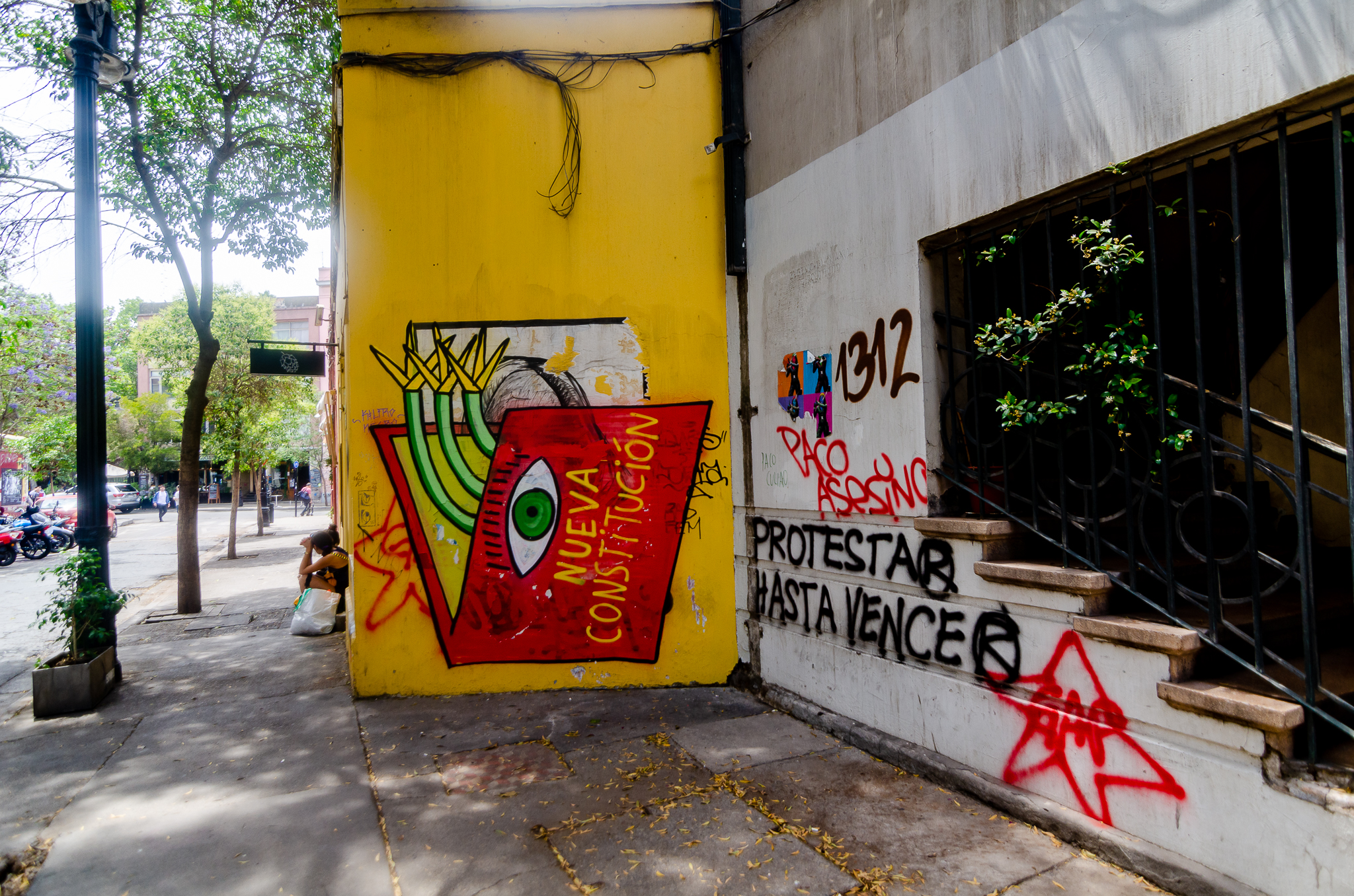
“Art, Resistance, and Socio-Politics in Modern Latin America” explores how art actively engages with social structures, beyond its aesthetic value. This includes social movements, community resistance against oppression, and political unrest. The following works dialogue with a range of media from Latin America, including language, comics, street art, plastic arts, and dance.
In “Whistling and Language Transfiguration: Zapotec Tones as Contemporary Art and Strategy for Resistance,” Gala Porras-Kim discusses an interdisciplinary art project that records translations of the Zapotec whistled language from the state of Oaxaca in Mexico. WaLT preserves the tonal qualities and sounds of those used during the colonial period, when Zapotec communities maintained this form of communication under colonial rule, making it a tool of resistance. This project highlights how language is a signifier of culture, specifically through sounds, and addresses the political and linguistic consequences of Indigenous language loss.
In “Mafalda: Middle Class, Everyday Life, and Politics in Argentina, 1964–1973,” Isabella Cosse engages with Mafalda, the well-known comic strip by the Argentine cartoonist Quino. Cosse examines how humor, irony, and the everyday expose contradictions of Argentina’s middle class during the 1960s and 1970s, a period marked by modernization and political radicalization. Cosse argues that, while Mafalda represented a unified society despite its heterogeneity, the comic strip was short-lived because it could no longer portray the middle class amid heightened political polarization and violence.
In “La Violencia in Colombia: New Research, New Questions,” Gonzalo Sánchez reexamines La Violencia, the political conflict between Liberals and Conservatives in Colombia between 1946 and 1958. This article sheds light on how La Violencia manifested in cultural and artistic expressions. Sánchez finds that artists depict the victims of La Violencia as protagonists in these artworks and rarely include the executors or rebels, indicating that this period was marked by destructive tragedy.
In “Coordinating Movements: The Politics of Cuban-Mexican Dance Exchanges, 1959–1983,” Elizabeth Schwall analyzes dance collaborations between Cubans and Mexicans during the Cold War period, specifically between 1959 and 1983. This article contends that these dancing revolutionaries engaged in creative and intimate ways as they became diplomats, operating in international relations between Mexico and Cuba.